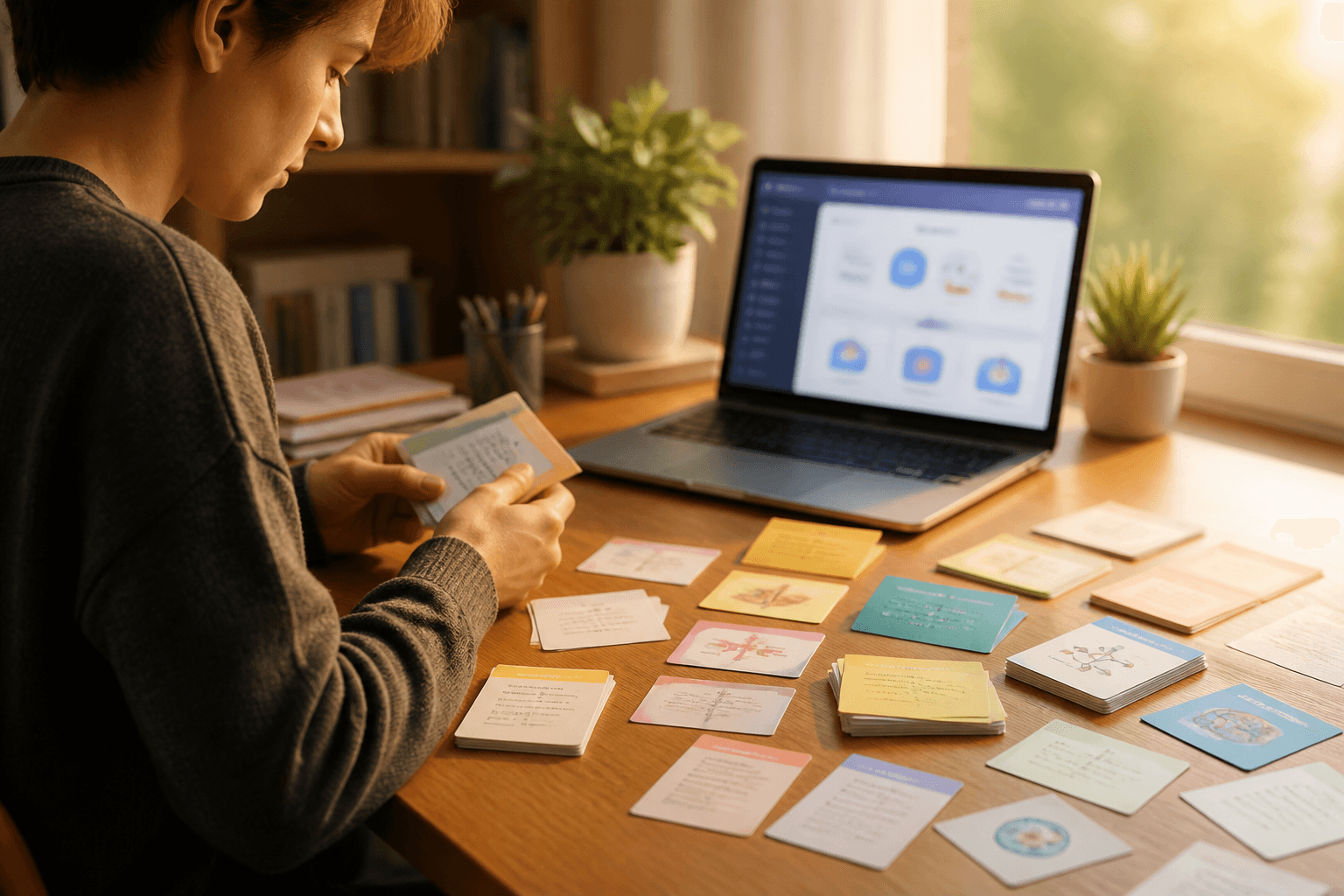
Creating effective flashcards can boost retention and improve your study results. AI-powered study tools can change your study routine and make learning easier. This guide gives practical tips to help you make flashcards that support your academic success. For more on this, see GCSE.
Key takeaways Related reading: A-Level.
- Focus on key concepts and definitions.
- Use images and diagrams for better recall.
- Incorporate spaced repetition to improve memory.
- Keep flashcards short and clear.
- Review regularly to track progress.
What are Flashcards and Why Use Them?
Flashcards are study tools that help students remember information by actively engaging with it. They have a prompt on one side and the answer on the other, making them great for memorization and review.Understanding the Basics of Flashcards
Flashcards can be physical cards or digital formats. Each card usually has a question, term, or concept on one side and the answer on the other. This simple design encourages active recall, a method that helps improve memory retention. For example, when studying for GCSE exams, a student might make flashcards for key terms in Biology, writing "Photosynthesis" on one side and its definition on the other.Digital flashcards have extra benefits. Platforms like StudentNotes.co.uk let students create flashcards from any document or YouTube video. This saves time and ensures study materials match the curriculum. Using an AI-powered study tool makes it easy to create effective flashcards quickly.
Benefits of Using Flashcards for Study
Flashcards have many advantages that can change your study routine. They promote active recall, which works better than passive reading. When a student quizzes themselves with flashcards, they engage with the material, strengthening their memory.Another key benefit is spaced repetition. This method involves reviewing flashcards at increasing intervals, which helps solidify knowledge over time. It’s especially useful for subjects like History or Languages, where memorizing dates or vocabulary is important.
Flashcards also increase engagement. By turning study sessions into interactive quizzes, students stay focused and motivated. For more tips on creating effective flashcards, check out this guide. For a deeper understanding of study techniques, see this resource.
How to Create Flashcards for Effective Learning?
Effective flashcards are clear, visually appealing study aids that help reinforce memory through active recall and spaced repetition. By focusing on key information, students can maximize retention and improve their understanding of subjects.Choosing the Right Format for Your Flashcards
Choosing a format that works for you is key. Digital flashcards often offer more flexibility than traditional paper cards. With platforms like StudentNotes.co.uk, you can create AI-powered flashcards directly from your study materials, including documents and YouTube videos. This saves time and ensures your flashcards fit your specific curriculum, whether for GCSE, A-Level, or university.Consider these formats:
- Text-based: Simple and effective for definitions or concepts.
- Image-based: Great for visual learners, especially in subjects like biology or art.
- Audio: Useful for language learning, allowing students to hear pronunciation.
Incorporating Key Information and Examples
Effective flashcards should focus on essential concepts and examples. Each card should have a question on one side and the answer on the other. For example, when studying history, a card might read, “What were the causes of World War I?” On the back, include a brief list of the main causes. This method encourages active recall, a strong technique for memory retention.Use specific examples to deepen understanding. If studying a scientific concept, include a real-world application. For math, provide a worked example. This approach aids memory and makes the material more relatable. For more tips on crafting effective flashcards, check out this detailed guide. To explore AI-generated options, visit this page for insights on improving your study routine.
What Techniques Enhance Flashcard Effectiveness?
Effective flashcards rely on techniques like active recall and spaced repetition to boost memory retention and understanding. These methods help students engage with material and remember information longer.Active Recall: The Science Behind Retention
Active recall is about retrieving information from memory. Instead of passively reviewing notes, students should test themselves on the material. For example, when using flashcards, read the question on one side, then try to answer it without looking at the answer side. This process strengthens neural connections, making it easier to recall information later.To create effective flashcards using active recall, include clear, concise questions. Avoid long explanations. For example, if studying for GCSE Biology, a card might ask, “What is photosynthesis?” The answer should be simple: “The process by which green plants convert sunlight into energy.” This method promotes active engagement, leading to better retention.
Spaced Repetition: Timing Your Reviews
Spaced repetition focuses on reviewing flashcards at increasing intervals. This technique helps reinforce knowledge over time, reducing the chance of forgetting. For example, review a flashcard today, then again in two days, then a week later. This timing works with how memory functions.Using AI-powered study tools like the Flashcard Maker on StudentNotes.co.uk can make this process easier. The tool can automatically schedule reviews based on your progress. This way, you spend less time managing your study schedule and more time learning.
Incorporating both active recall and spaced repetition into your study routine can lead to effective flashcards that improve your learning experience.
How Can AI Tools Improve Flashcard Creation?
AI tools greatly enhance flashcard creation by automating content generation and improving study techniques. This makes it easier for students to create effective flashcards that boost retention and engagement.Using AI-Powered Study Tools for Efficiency
AI-powered study tools speed up the flashcard creation process. Instead of writing cards by hand, students can use platforms like StudentNotes.co.uk to generate flashcards from any document or video. This saves time and ensures the flashcards focus on key concepts.For example, a student studying for GCSEs can upload their revision notes or a lecture video. The AI tool scans the material and produces flashcards that highlight important information. This allows for a more targeted study approach, making it easier to remember essential details.
Transforming Documents and Videos into Flashcards
Turning existing materials into effective flashcards is easy with AI tools. Students can change lecture notes, textbooks, or even YouTube videos into interactive flashcards in minutes. This feature is especially helpful for visual learners who may understand concepts better through engaging formats.To create effective flashcards from videos, a student can input the video link into the flashcard maker. The AI extracts key points and generates cards based on the content. This ensures that students study relevant information, maximizing their retention.
Overall, AI tools make flashcard creation more efficient and improve the quality of study materials, enabling students to study smarter. For more strategies on crafting effective flashcards, check out How to Make Effective Flashcards: A Step-by-Step Guide.
What Are Some Tips for Using Flashcards Effectively?
Effective flashcards improve memory retention by promoting active recall and spaced repetition. These techniques make it easier to remember information during exams or while studying for GCSE, A-Level, or university courses.Engaging with Flashcards: Study Techniques
Active recall is a strong method for studying with flashcards. When you test yourself, it forces your brain to retrieve information, which strengthens memory. For example, write a question on one side and the answer on the other. Quiz yourself regularly. Use the flashcard maker on StudentNotes.co.uk to create effective flashcards quickly from your notes or even YouTube videos.Spaced repetition is another key technique. This method involves reviewing flashcards at intervals. Instead of cramming all at once, revisit your cards after a day, a week, and then a month. This helps transfer knowledge from short-term to long-term memory, making studying more efficient.
Tracking Your Progress and Adjusting Your Approach
Monitoring your progress is essential. Keep track of which flashcards you know well and which ones need more work. You can use a simple checklist or a digital tool to mark your understanding. For instance, create categories like “mastered,” “needs review,” and “new.”Adjusting your study strategy based on this feedback can improve your efficiency. If you find certain cards difficult, consider breaking them down into simpler concepts. This can help clarify complex topics, making your flashcards more effective. For more tips on creating effective flashcards, check out this guide.
Where to Find Free Resources for Flashcard Creation?
Free resources for creating effective flashcards can be found through community libraries and AI-powered study tools. Each option offers unique benefits, making study preparation easier for UK students at all levels.Exploring Community Libraries for Shared Resources
Community libraries are great for students looking for effective flashcards. Many platforms let users share their study materials. These shared resources often include flashcards made by fellow students, covering various subjects like GCSE and A-Level.Using a community library can save time. Instead of starting from scratch, you can access pre-made flashcards that match your curriculum. Look for libraries that categorize materials by subject. This way, you can quickly find relevant content for your studies.
Accessing Free AI Study Tools at StudentNotes.co.uk
StudentNotes.co.uk offers free AI-powered study tools designed for UK students. The Flashcard Maker turns your notes or even YouTube videos into effective flashcards. This feature is especially useful for those who prefer to study using digital formats.The platform also provides various interactive study modes, including spaced repetition and active recall. These techniques improve memory retention, making your study sessions more productive. To get started, simply upload your material, and let the AI generate flashcards tailored to your needs.
Using free AI study tools changes your study routine and allows you to create effective flashcards in less time. You can focus on mastering the content instead of spending hours on manual creation. For more tips on crafting effective flashcards, check out this guide.
Practical Checklist for Creating Flashcards
- Identify key topics and terms to include.
- Create flashcards using a flashcard maker for easy access.
- Incorporate different study modes like active recall.
- Schedule regular review sessions for spaced repetition.
How studentnotes.co.uk fits this workflow
StudentNotes.co.uk provides a free flashcard maker that allows you to create effective flashcards from any document or YouTube video. With AI-generated study tools, you can easily transform your materials into interactive aids that fit your study needs.
Our platform also offers a community library of revision notes, ensuring you have access to a wealth of shared resources to enhance your learning experience.
Frequently Asked Questions
What are the best practices for making flashcards?
Best practices include focusing on key concepts, using images, keeping text short, and incorporating spaced repetition for effective learning.
How often should I review my flashcards?
Regular reviews are essential. Aim for daily practice at first, then gradually extend the intervals as you become more familiar with the material.
Can AI tools really help with flashcard creation?
Yes, AI tools can quickly generate flashcards from various sources, making the creation process more efficient and tailored to your study needs.
What types of information should I include on flashcards?
Include definitions, key concepts, questions and answers, and relevant images to help with memory retention and understanding.
How do I track my progress with flashcards?
Use spaced repetition techniques and keep a record of which cards you find challenging. This helps you focus on areas needing improvement.